What determines where conservation happens and what can researchers learn from people putting policy into practice? These questions were at the heart of Sean’s experience at the Association for Tropical Biology and Conservation (ATBC) conference in Xishuangbanna, China.
For Sean, whose PhD focuses on Other Effective Area-based Conservation Measures (OECMs), the conference offered an opportunity to explore emerging research, hear about implementation challenges and reconnect with friends from Singapore.
Looking beyond conservation targets
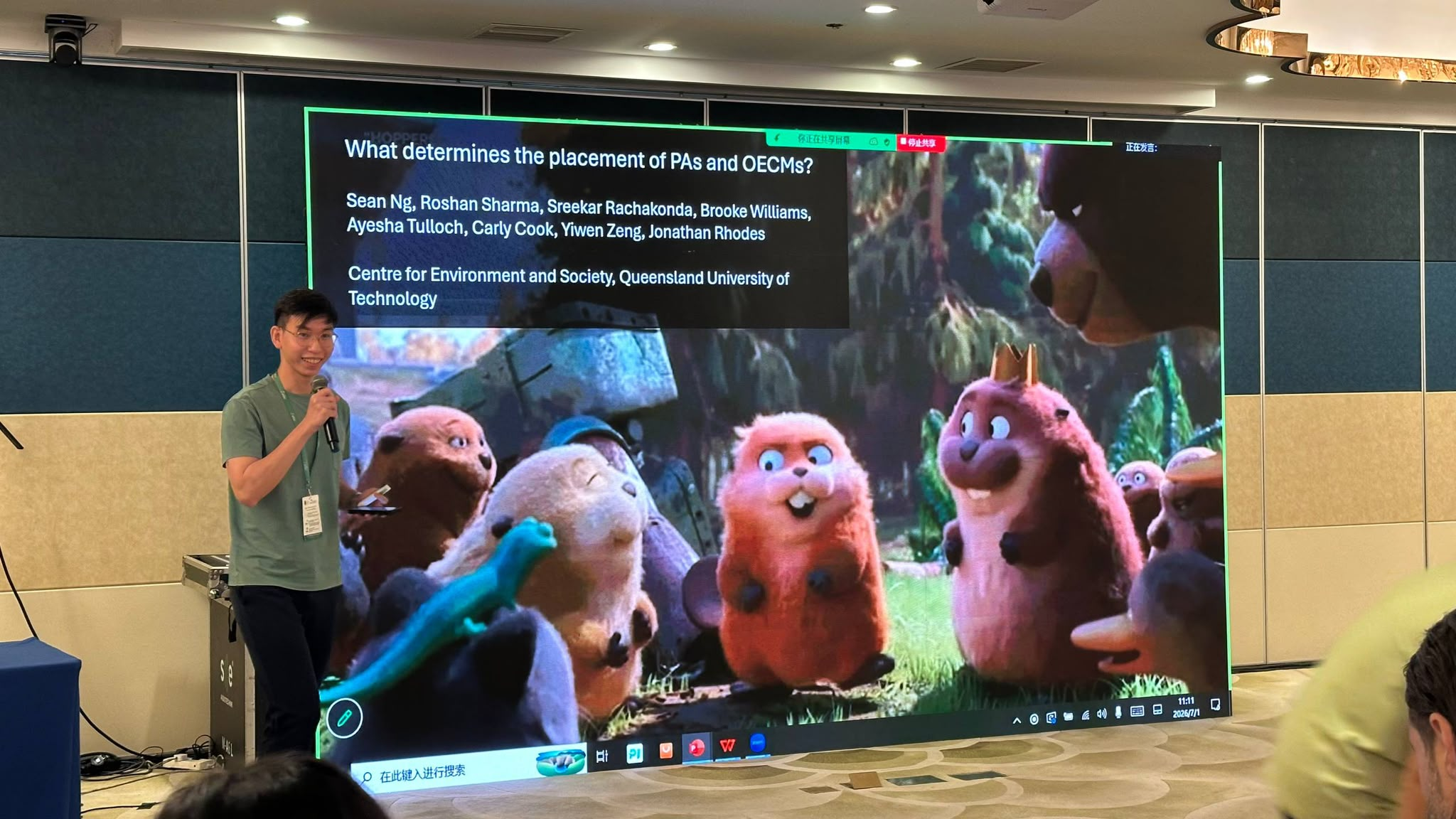
Sean gave an oral presentation in a session focused on Target 3 of the Kunming–Montreal Global Biodiversity Framework: the global goal of conserving 30% of land and water by 2030. His presentation explored a question with important implications for achieving that goal. Protected areas have often been established in places where conservation faces fewer competing economic demands, such as land with low agricultural value or high-altitude areas. As OECMs become part of conservation networks, might they show similar patterns?
To bring this question to life, Sean connected his research to Hoppers, a film he had recently watched. Its themes of economic development and conservation provided an accessible starting point for discussing how economic and social considerations influence where conservation happens. The presentation prompted useful audience questions, and Sean recommends the film to anyone interested in conservation.
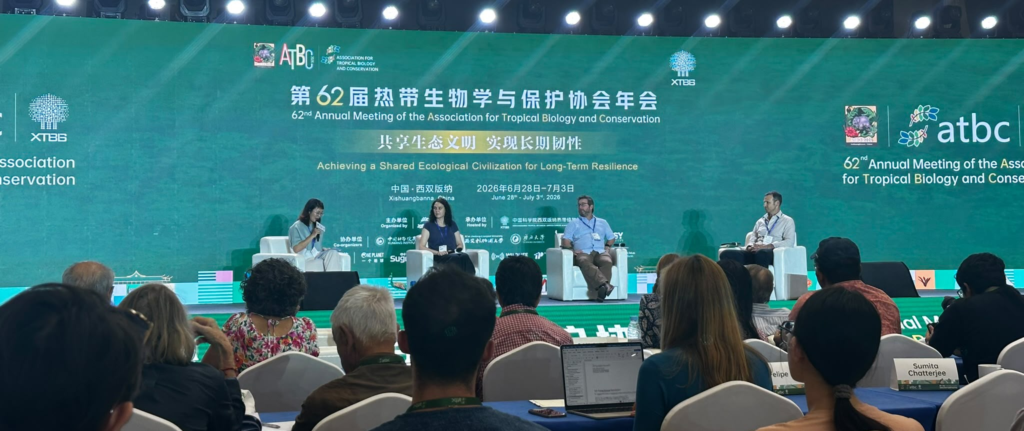
Some of Sean’s most valuable learning happened through conversations with others working on OECMs. Hearing about their experiences offered a closer view of the practical challenges involved in adopting and implementing this conservation approach. For researchers working with policy and large-scale spatial analysis, these exchanges were a reminder that local circumstances can shape whether policies achieve their intended outcomes. They also helped Sean think about how to frame his own thesis.
The inspiration translated quickly into writing: while waiting at the airport on his journey home, Sean drafted the introduction to his first chapter. His advice to other researchers is to consider attending a conference early in the research process, when new ideas and conversations can help shape the work ahead.
Night walks, new tastes and familiar faces
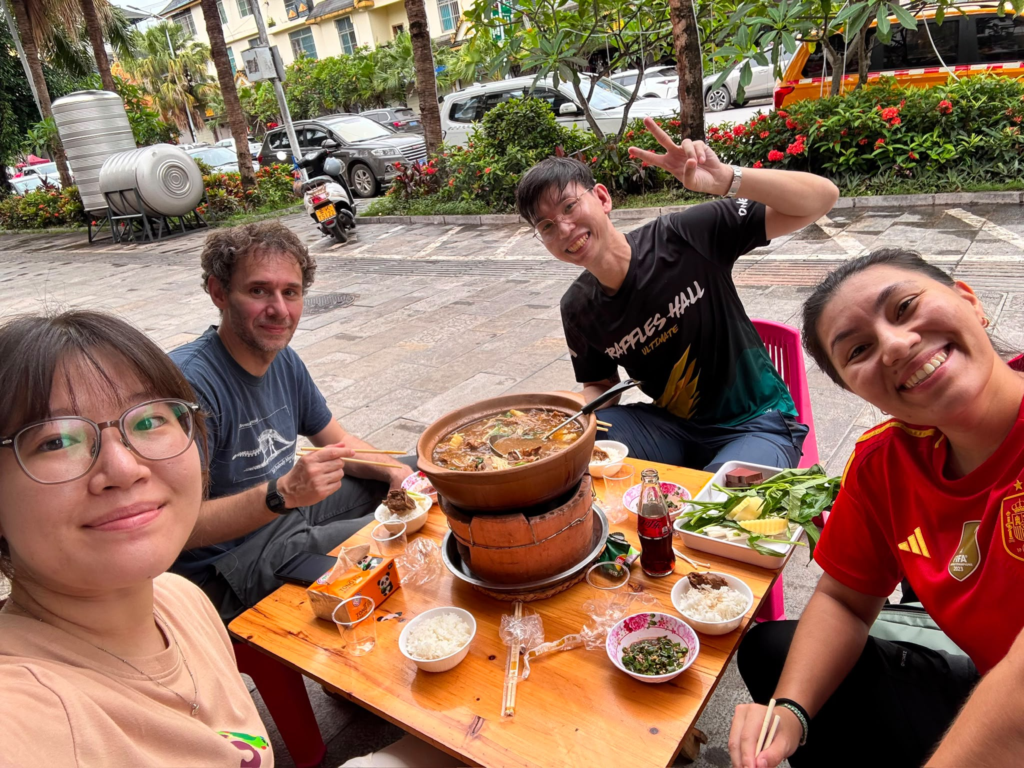
Beyond the conference sessions, Xishuangbanna offered plenty to explore. Sean was struck by the region’s cultural connections with neighbouring Southeast Asia and enjoyed trying foods ranging from mushroom hotpot to stir-fried bamboo worms.
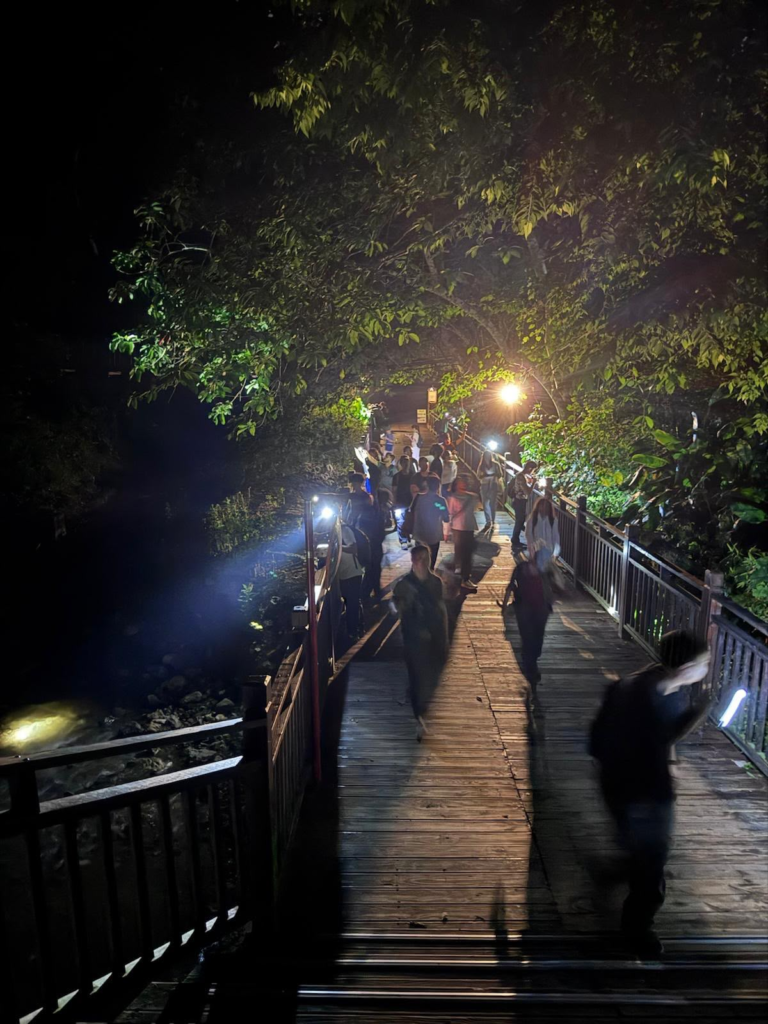
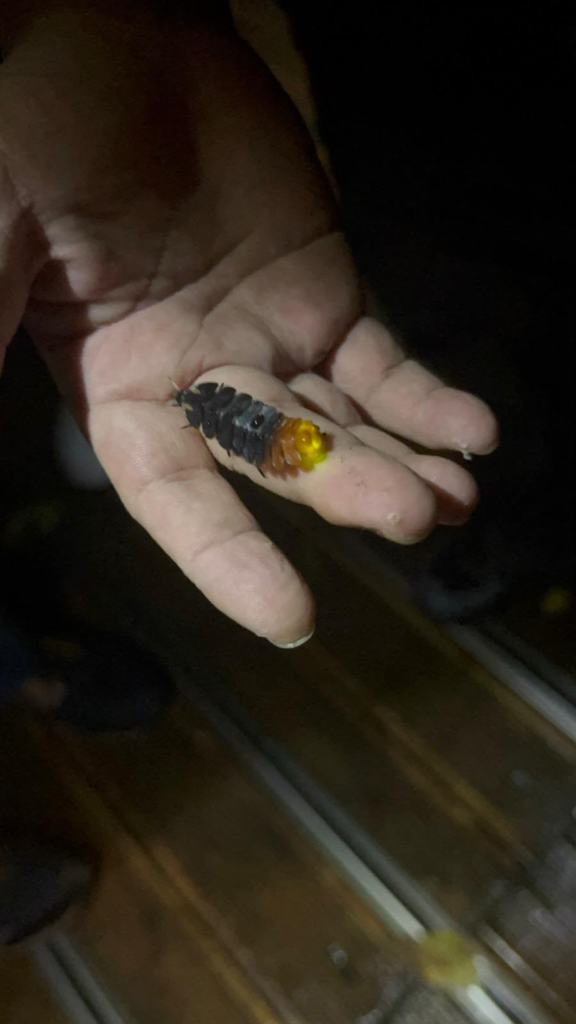
A night walk revealed freshwater crabs, geckos and a snake, but his favourite wildlife encounter was something smaller: a glowing firefly larva, whose unusual shape reminded him of a trilobite beetle.

Among all these experiences, catching up with friends from Singapore remained a personal highlight, made possible by the conference’s relatively nearby location.
Leave a Reply