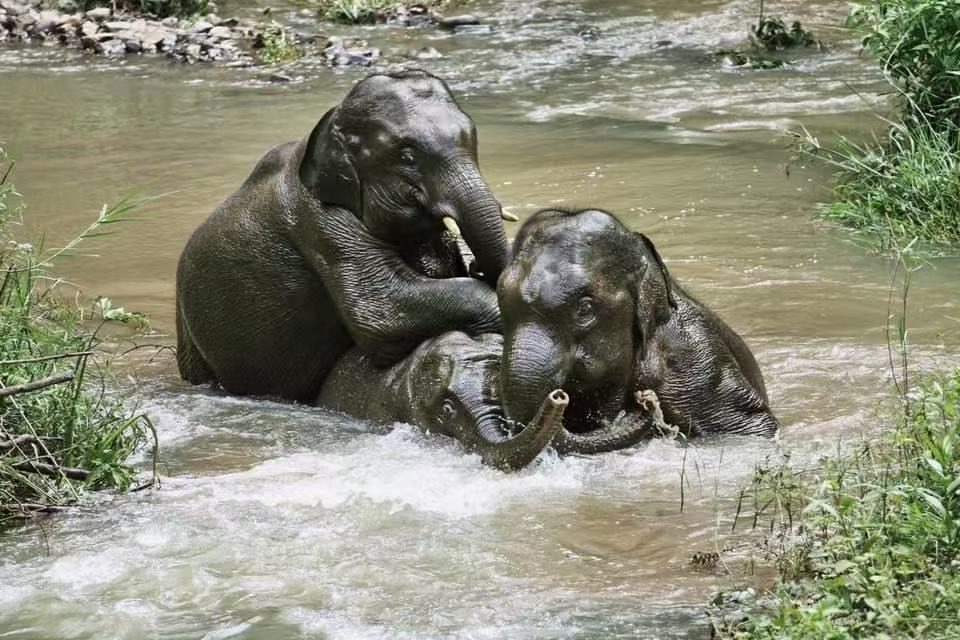
Today is World Elephant Day, and the passion for saving elephants and the forests they depend on has shaped much of my conservation career.
We often talk about forests in terms of hectares lost or species declining. These statistics matter. But years of working in elephant conservation have also made me wonder:
How do we move people from knowing forests are disappearing to actually feeling the loss, and doing something about it?
That question has stayed with me and led me to pursue my PhD, giving me the opportunity to explore and reflect more deeply on how we communicate with and engage communities in conservation. From the rainforests of Asia to the eucalypt woodlands of Australia, I have become increasingly interested in how creative and artistic approaches can change the way we see forests and inspire us to protect them.
Recently, I became fascinated by two artists who approach this challenge in completely different ways. One speaks through wonder. The other speaks through warning. In the video below, I share my own reflections on these artworks and what we, as conservation researchers and practitioners, might learn from them.
French sculptor Eva Jospin creates vast, immersive forests from layers of cardboard. Her quiet, dreamlike landscapes invite us into the forest through wonder and encourage us to reflect on our relationship with nature. Australian printmaker Rew Hanks confronts us directly. Through his striking hand-coloured linocuts, he responds to the mining threats facing Queensland’s Bimblebox Nature Refuge, using bold imagery to make the forces behind forest destruction difficult to ignore.
Both approaches resonate deeply with me as a conservationist. They give me hope that art can be one of the powerful ways we help people see, value and act for forests.
Happy World Elephant Day! I would love to see us explore even more ways to bring conservation science, traditional knowledge and art together to tell powerful stories for elephants and the forests they depend on.